
Blog
How Rattan Is Made – An Inside Look at the Process

How Rattan Is Made – An Inside Look at the Process
Rattan is loved for its warmth, texture and natural beauty — but behind every woven pendant, chair or basket lies a surprisingly detailed process.
From forest harvesting to handwoven finishing, rattan passes through many careful stages before it reaches Australian homes.
This guide takes you through each step of the journey, blending slow craft traditions with a modern appreciation for natural materials.
—
1. Rattan begins as a fast‑growing forest vine
Rattan is not a tree — it’s a climbing vine that grows throughout tropical forests.
Because it grows rapidly and regenerates quickly, it’s considered one of the most sustainable natural materials.
Harvesting rattan helps local communities maintain forests rather than clear them, making it a vital part of eco‑friendly forestry.
—
2. The vines are cleaned, dried and straightened
After harvesting, rattan must be:
- Cleaned to remove leaves and outer fibres
- Sun‑dried to strengthen its structure
- Straightened using heat or open‑air techniques
This preparation phase enhances the durability of the material and ensures a smooth, flexible base for weaving.
Drying rattan in the sun is a natural, low‑impact method that preserves its warm golden tone.
—
3. Rattan is sorted by thickness and quality
Not all rattan is the same.
Vines are sorted according to:
- Thickness
- Texture
- Flexibility
- Colour tone
- Intended use (frame pieces vs. weaving strands)
Thicker canes become structural elements for chairs or frames, while thinner strands are split for intricate weaving.
This sorting process is essential for maintaining consistent quality in handcrafted pieces.
—
4. Splitting, peeling and smoothing the fibres
To create fine weaving material, rattan is carefully split into narrow strips.
Artisans peel away the outer layer and smooth each strip to achieve a flexible, uniform fibre.
This stage requires real skill — the goal is to keep each strip strong while preventing breakage.
Hand‑prepared fibres result in a smoother, more consistent weave in the final product.
—
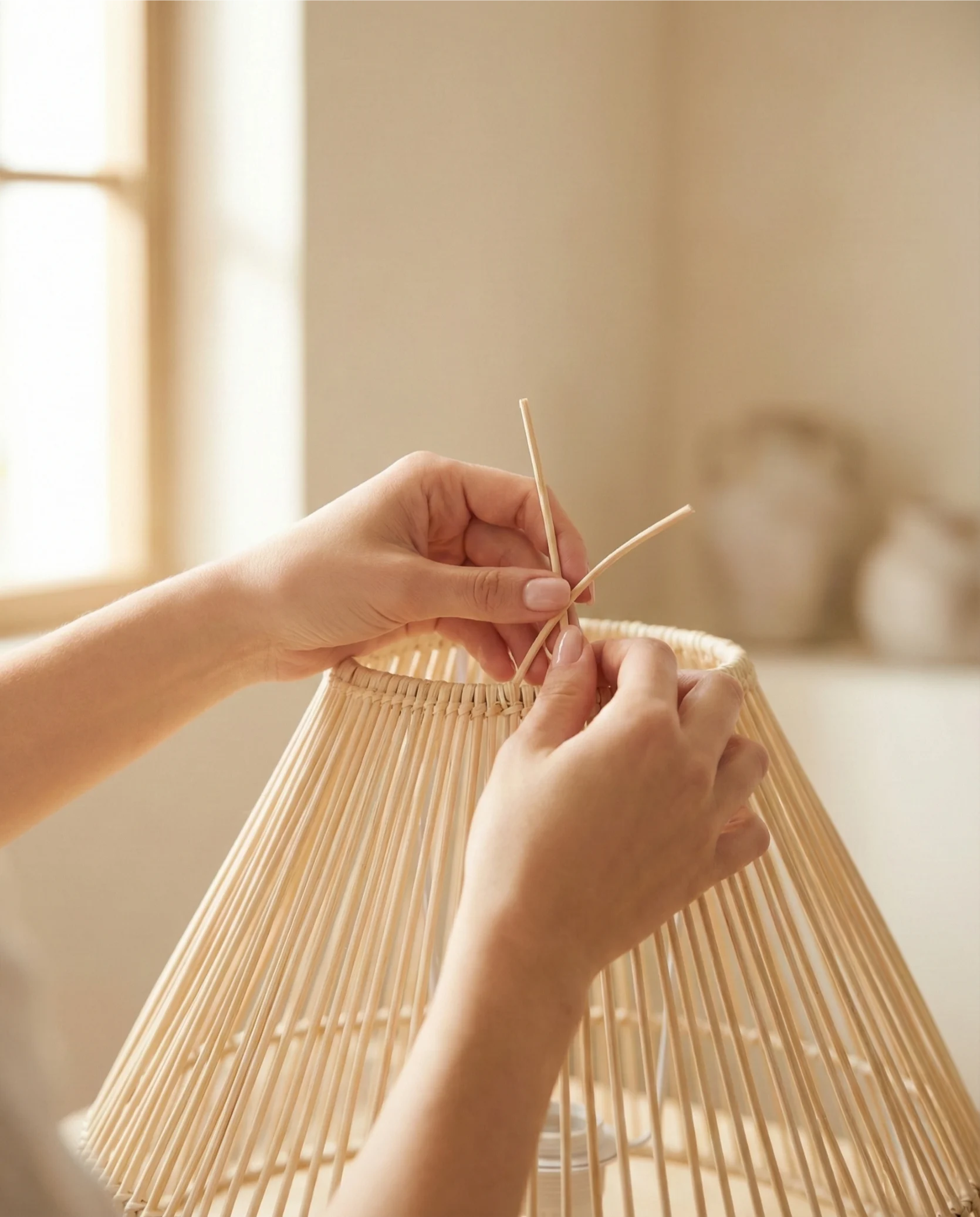
5. Handweaving forms the structure and final shape
Handweaving is the heart of rattan craftsmanship.
Using traditional techniques, artisans work with rhythmic precision to wrap, bend and interlace the fibres.
Each pattern — tight weave, open weave or layered cross‑weave — creates a different visual effect and lighting texture.
Well‑crafted rattan pieces show:
- Even tension
- Smooth, consistent overlaps
- Clean finishing
- Organic, natural variations
These details make handcrafted rattan items feel warm, authentic and full of character.
—
6. Finishing touches: sanding, shaping and sealing
Once the piece is woven, artisans:
- Trim excess fibres
- Sand edges for comfort
- Shape curves and angles
- Apply natural or low‑VOC sealants
These finishing steps protect the rattan, enhance durability and prepare each piece for long‑term use in Australian climates.
—
Conclusion
From harvesting to handweaving, every stage of rattan production reflects patience, skill and respect for natural materials.
Understanding how rattan is made deepens our appreciation for its role in sustainable, calm and beautifully crafted Australian homes.
Whether used in lighting, storage or furniture, rattan carries a story of craftsmanship — one that honours tradition while fitting seamlessly into modern living.