
Blog
Rattan Through the Ages – A Historical Retrospective

Rattan Through the Ages – A Historical Retrospective
Rattan has been used for thousands of years across cultures and continents.
From ancient civilisations to contemporary Australian homes, this natural material has remained prized for its strength, flexibility and beauty.
This retrospective explores how rattan evolved across eras — and why it continues to be deeply loved today.
—
1. Rattan in ancient civilisations
Rattan has been used for more than 3,000 years.
Ancient communities across Southeast Asia utilised it for:
- Baskets
- Tools
- Seating
- Household objects
- Storage containers
Its durability and flexibility made it essential for daily life.
Rattan’s early use also reflects a long-standing tradition of working with natural materials — a value that aligns closely with today’s slow-living philosophy.
—
2. Rattan in traditional craft cultures
For centuries, rattan weaving was passed down through generations.
Artisans developed intricate techniques for:
- Splitting and smoothing fibres
- Creating strong structural frames
- Achieving tension-balanced weaving patterns
These traditions remain alive today and continue to influence modern rattan craftsmanship.
—
3. Rattan during the colonial and early modern periods
In the 17th to 19th centuries, rattan gained popularity in Western households due to its lightweight structure and tropical aesthetic.
Rattan furniture became especially favoured in conservatories, verandahs and sunrooms.
Early modern rattan pieces highlighted:
- Curved silhouettes
- Decorative weaving
- Lightweight mobility
- Airy, breathable textures
These design qualities still influence contemporary Australian coastal and indoor–outdoor living styles.
—
4. The rise of mid-century rattan design
During the mid-20th century, rattan experienced a major revival.
Designers embraced it for its sculptural capabilities and organic forms — ideals central to mid-century modern design.
Rattan became associated with:
- Clean lines
- Simple curves
- Warm tones
- Relaxed elegance
Mid-century pieces remain highly sought after and continue to inspire many of today’s rattan furniture designs.
—
5. Rattan in contemporary Australian homes
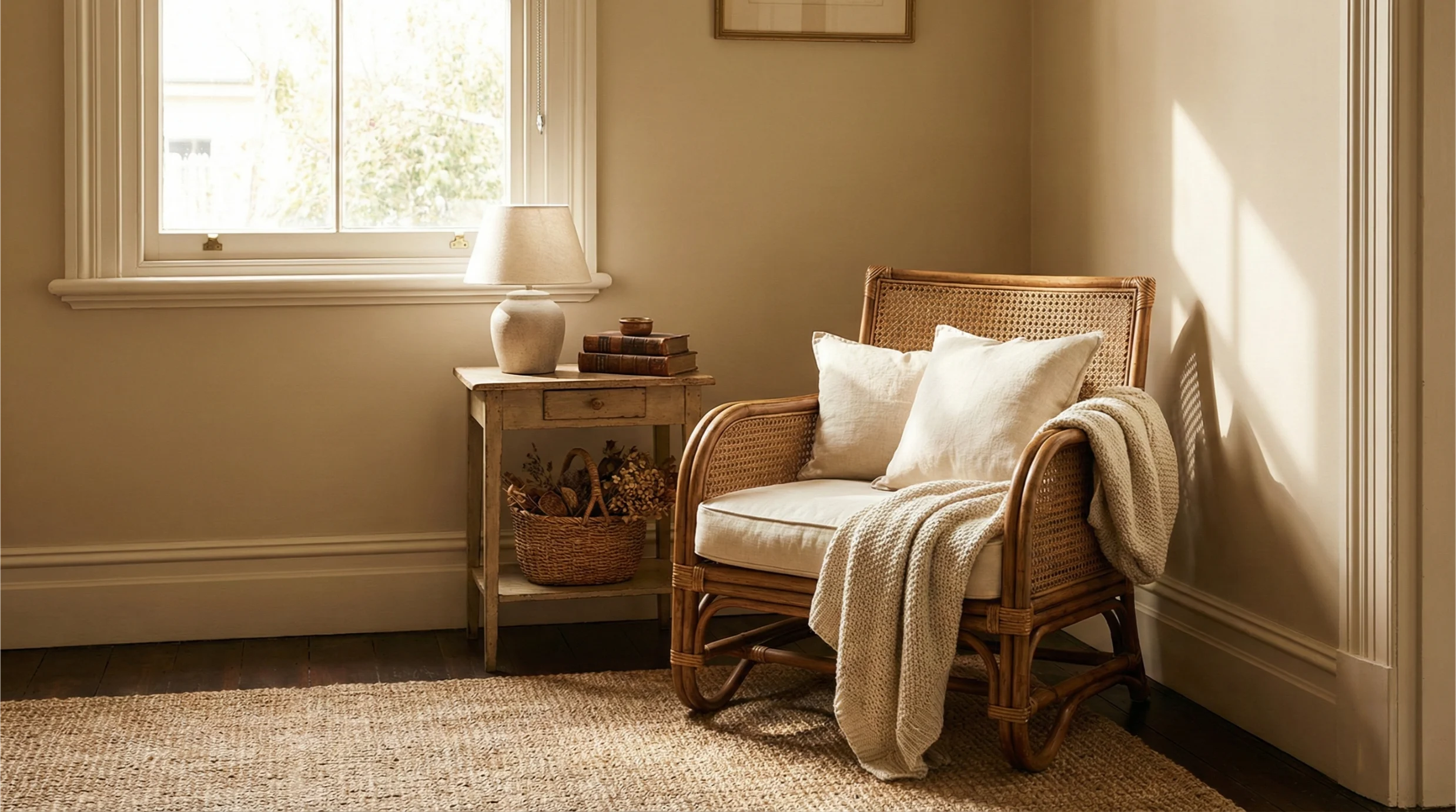
Today, rattan has firmly returned as a favourite material in modern Australian interiors — especially within Japandi, warm minimalist and coastal design.
Australians choose rattan for its:
- Warm natural tones
- Gentle texture
- Indoor–outdoor versatility
- Sustainable qualities
- Handcrafted beauty
It brings softness to modern architecture and aligns perfectly with Australia’s love of relaxed, nature-connected living.
—
Conclusion
Rattan’s journey through history is a story of craftsmanship, culture and natural harmony.
From ancient tools to contemporary lighting and furniture, rattan has remained relevant for thousands of years — adapting to new styles while preserving its timeless appeal.
In modern Australian homes, rattan continues to symbolise sustainability, craftsmanship and the enduring beauty of natural materials.