
Blog
The Benefits of Rattan Furniture for Eco‑Friendly and Sustainable Home Décor

The Benefits of Rattan Furniture for Eco‑Friendly and Sustainable Home Décor
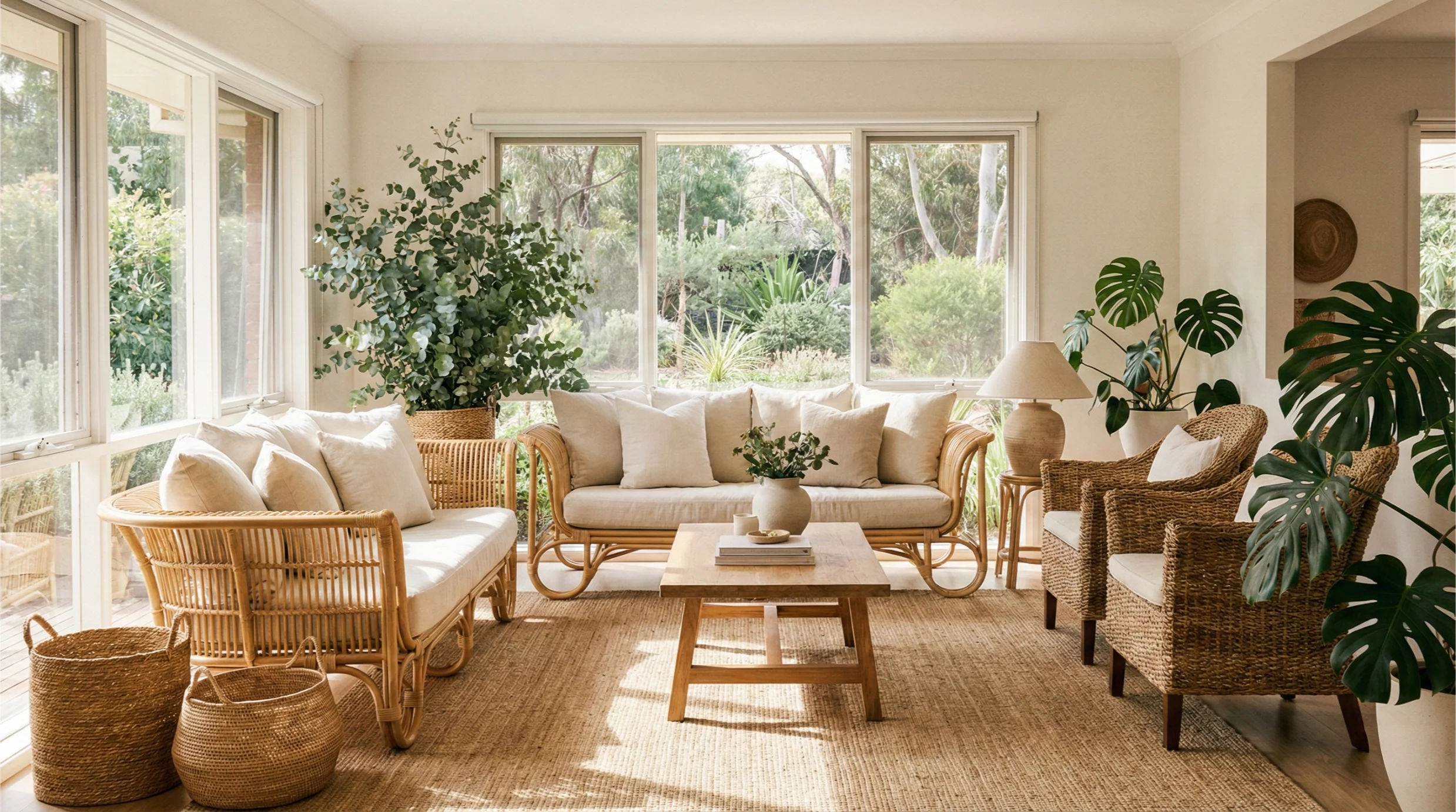
As more Australians embrace sustainable living and seek natural materials for their homes, rattan furniture has become one of the most popular choices.
Lightweight, durable and environmentally responsible, rattan offers a warm aesthetic while supporting conscious design values.
Here’s why rattan furniture is an ideal option for creating an eco‑friendly and beautifully sustainable Australian home.
—
1. Rattan is a rapidly renewable natural resource
Rattan grows far more quickly than hardwood trees — often reaching full length within just a few years.
Because it regenerates naturally and can be harvested without damaging surrounding forests, rattan is considered one of the most sustainable natural fibres.
For Australians seeking eco‑friendly furniture, rattan provides a renewable alternative to materials that require heavy processing or long growth cycles.
—
2. Low environmental impact during production
Compared to synthetic materials or heavily processed woods, rattan requires minimal industrial manufacturing.
Many rattan pieces are shaped and woven by hand, meaning:
- Lower energy use
- Minimal machinery
- Reduced emissions
- Less chemical processing
Handcrafted production also reduces waste, as artisans use each cane efficiently.
—
3. Lightweight yet impressively durable
Despite its gentle appearance, rattan is extremely strong.
Its natural flexibility allows it to bend under pressure without breaking — ideal for chairs, shelving, tables and storage pieces.
Benefits of rattan durability:
- Long‑lasting with proper care
- Resistant to everyday wear
- Naturally shock‑absorbent
- Holds structure for years
This combination of strength and lightness makes rattan perfect for modern Australian homes, where flexibility and longevity matter.
—
4. Completely biodegradable and chemical‑free
One of the strongest sustainability advantages of rattan is its biodegradability.
When untreated or finished with low‑VOC sealants, rattan returns to the earth naturally at the end of its life cycle — unlike plastics or metallic composites.
Choosing rattan furniture means less waste, fewer toxins and a smaller environmental footprint.
—
5. Supports traditional craftsmanship and ethical production
Handwoven rattan furniture celebrates skilled craftsmanship.
By choosing rattan, you are supporting artisan communities who rely on traditional weaving techniques passed down through generations.
This connection between natural fibre and human craft brings warmth and meaning into a home — something mass‑produced furniture cannot replicate.
—
6. Perfect for eco‑friendly interior styles
Rattan blends seamlessly with many of the sustainable design trends popular in Australia:
- Japandi
- Warm minimalism
- Eco‑coastal
- Natural organic modern
- Indoor–outdoor living
Its warm tones and gentle curves soften modern spaces while reinforcing a sense of calm and natural simplicity.
—
Conclusion
Rattan furniture offers a rare combination of sustainability, durability and natural beauty.
As an eco‑friendly material that requires minimal processing and supports traditional craftsmanship, it’s a perfect choice for Australians seeking greener home décor.
Whether used as a statement chair, storage piece or woven lighting accent, rattan helps create homes that feel warm, responsible and deeply connected to nature.